
Legionella is a bacterium commonly found in natural and man-made water systems. Under favourable environmental conditions, it can multiply rapidly and present a significant public health risk. Cooling towers, if not properly managed, provide conditions that can support both the growth and aerosolisation of Legionella.
During normal operation, cooling towers release fine water droplets into the air. If Legionella is present in the circulating water, these droplets can carry the bacteria into the surrounding environment. Inhalation of contaminated aerosols can cause Legionnaires’ disease, a severe and potentially fatal form of pneumonia.

Managing Legionella risk in cooling towers is therefore both a legal obligation and a critical safety responsibility.
—
Causes of Legionella Growth in Cooling Towers
Legionella growth is encouraged by the following conditions:
- Warm water temperatures (20–45°C) – the ideal range for bacterial growth
- Stagnant or low-flow areas – allowing bacterial colonies to establish
- Presence of biofilm – providing protection from chemical treatment
- Accumulated sludge, scale, or corrosion products – supplying nutrients and surface area
- Inadequate biocide treatment – permitting microbial populations to increase
Because cooling towers naturally operate within this temperature range and are exposed to environmental contamination, Legionella control must be actively managed.
—
Health Risks
The primary health risk from Legionella exposure occurs through inhalation of contaminated aerosols, resulting in Legionnaires’ disease, a serious pneumonia requiring medical treatment.
Legionella can also cause Pontiac fever, a flu-like illness that is typically non-fatal.
Individuals at higher risk of severe illness or death include:
- Elderly persons
- Smokers
- Immunocompromised individuals
- People with chronic respiratory conditions
Due to the wide dispersal of cooling tower aerosols, outbreaks can affect not only people on-site but also those in surrounding buildings or public areas. Under the right conditions, a single system has the potential to expose hundreds of people.
—
Principles of Effective Legionella Control
Effective Legionella control requires a comprehensive management program, including:
- Maintaining a clean cooling tower free from excessive dirt, debris, corrosion, and scale
- Use of water treatment biocides to control bacteria, including Legionella
- Correct system design and installation to minimise dead legs and dissimilar metals
- Appropriate operational practices, ensuring regular circulation and use of cooling fans to minimise water temperature
- Installation of effective drift eliminators covering the full exhaust air stream
- A professional water treatment service contract to manage water chemistry, dosing control, and filtration equipment
- Regular microbiological testing for bacteria and Legionella
Legionella control is not a single action but a combination of chemical, mechanical, and operational measures. Failure in any one area can create conditions that allow Legionella to multiply.
Biocide Program
A well-managed biocide program typically includes:
- A primary oxidising biocide (e.g. chlorine or bromine)
- A secondary non-oxidising biocide
- Periodic dosing of a biodispersant to assist with biofilm removal
- Shot dosing with an alternative biocide during routine service visits
Correct biocide concentration is essential. Underdosing can allow bacteria, including Legionella, to survive and potentially develop tolerance to the biocides in use. Initial system volumes are calculated and dosed in accordance with recommended product guidelines.
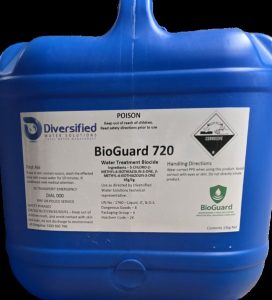
Once established, actual bacteria and Legionella test results are the primary indicators used to refine and optimise biocide dose rates. Manufacturer-recommended dosages serve only as a starting point.
Testing and Monitoring
Regular testing is essential to verify the effectiveness of Legionella control measures. Testing frequency should be determined based on factors such as:
- System location (e.g. shopping centres, city CBDs)
- Industry type (e.g. hospitals, aged care facilities)
- History of adverse test results
- System characteristics, including exhaust location, water temperature, and environmental exposure
Bacteria and Legionella test results provide critical feedback on system conditions and allow the water treatment program to be adjusted as required.
Drift Eliminators and Legionella Control
Drift eliminators are critical components in cooling towers designed to minimise the release of water droplets into the surrounding environment. These droplets can contain concentrated levels of Legionella if the system is not properly controlled, making drift a primary pathway for community exposure.
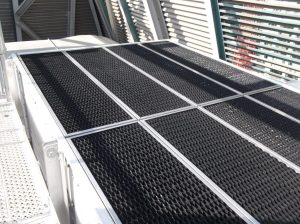
Modern drift eliminators force air to change direction multiple times as it exits the tower, allowing water droplets to separate from the airflow and return to the system. When correctly installed and maintained, effective drift eliminators can reduce water loss to less than 0.002% of circulating flow.
Well-maintained drift eliminators:
- Limit the release of potentially contaminated aerosols
- Reduce off-site exposure risk to occupants and the public
- Support compliance with health regulations and standards
Damaged, poorly fitted, or fouled drift eliminators significantly increase aerosol release risk and must be inspected regularly as part of a comprehensive cooling tower management program.
Cleaning and Disinfection
Cooling towers should be physically cleaned and disinfected at least every six months, with more frequent cleaning recommended where risk factors are present. Maintaining a clean system is one of the most effective methods of reducing conditions that encourage bacterial growth.
Physical cleaning allows for the removal of biofilm from wetted surfaces within the cooling tower, which may not be fully controlled by chemical treatment alone. Studies have shown that Legionella can reside within biofilm, where it is protected from contact with biocides.
In addition to routine cleaning, additional cleaning or decontamination must be carried out when elevated Legionella levels are detected. Cleaning is also required following system modifications or if the system has been shut down or left uncirculated for more than 48 hours.
Summary – Legionella and Control Strategies
Cooling towers can provide conditions that support the growth and spread of Legionella if not properly managed. Because cooling towers release fine water droplets into the surrounding environment, any Legionella present in the system can pose a serious health risk to building occupants and the public.
Effective Legionella control requires a comprehensive management program that combines correct system design, regular cleaning and disinfection, appropriate biocide treatment, routine testing, and the use of well-maintained drift eliminators. No single control measure is sufficient on its own—failure in any area can create conditions that allow Legionella to multiply.
Ongoing monitoring, maintenance, and professional water treatment oversight are essential to maintain compliance, protect public health, and reduce the risk of Legionella outbreaks.